How to plan your life and death
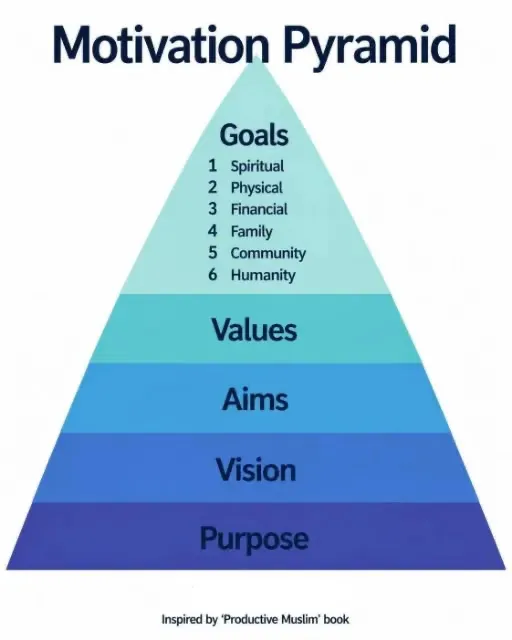
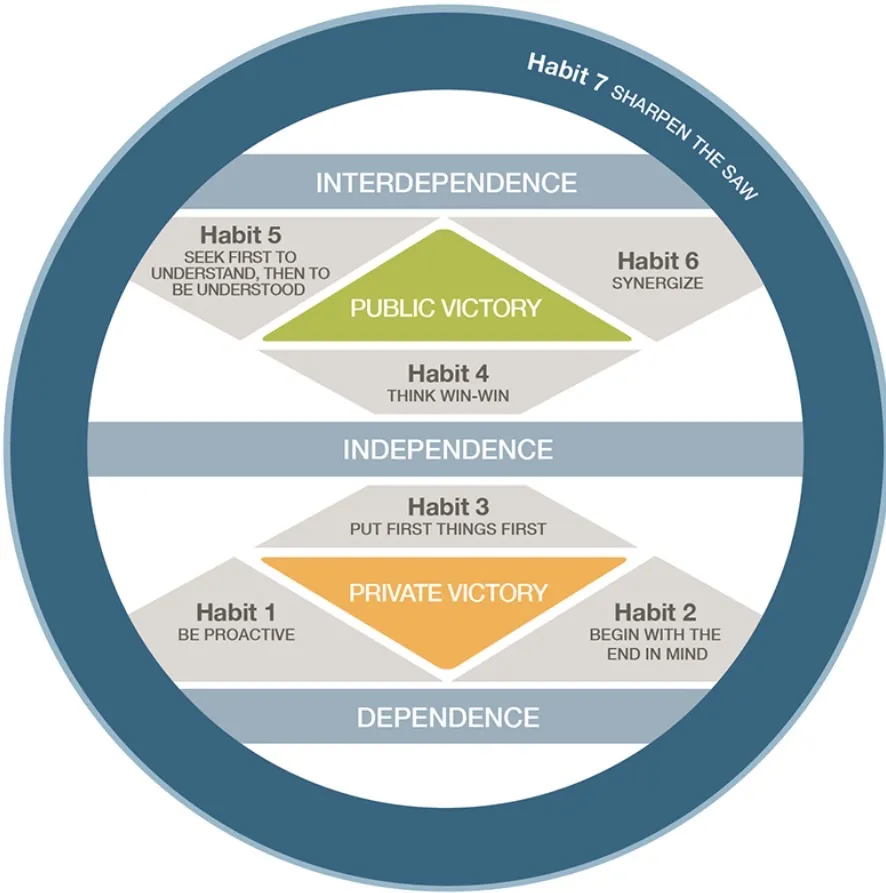
Private
- Spiritual
- Corporeal
- Financial
Public
- Family
- Community
- Humanity
2. Corporeal:
- Physical (a. health and b. skill)
- Emotional
- Medical
- Nutritional
- Social
2.1.a Corporeal: Five Components of Health‑related Physical Fitness
i. Cardiovascular Endurance
Cardiovascular Endurance is the ability of the heart, lungs, and blood vessels to deliver oxygen‑rich blood to working muscles during continued aerobic training.
ii. Muscular Strength
Strength is the extent to which muscles can exert force by contracting against resistance measured by 1-5 max rep.
iii. Muscular Endurance
Muscular endurance is the capacity of a muscle to sustain repeated contractions over time without fatigue measured by 12+ reps with light to moderate resistance.
iv. Flexibility
Flexibility is the ability to achieve an extended range of movement in a joint or group of joints without being impeded by excess tissue such as body fat or muscle mass.
v. Body Composition
Body composition is the proportion of fat mass to lean mass (muscle, bone, organs) in the body, measured by body fat percentage. Fat and muscle weigh exactly the same, though muscle takes up less space on the body, which can really alter the way you look.
2.1.b Corporeal: Six Components of Skill-related Physical Fitness:
i. Agility
Agility is the ability to quickly perform movements, changing the direction of the body in opposing directions efficiently and effectively while maintaining control.
ii. Balance
Balance is the ability to maintain the body’s centre of gravity over its base of support while stationary or moving using the body’s sensory functions.
iii. Coordination
Co-ordination is the ability to perform a movement using one or more body parts in a smooth, controlled and efficient way.
iv. Power
Power is the ability to exert maximum muscular contraction instantly in an explosive burst of movement. The two components of power are strength and speed.
v. Reaction Time
Reaction Time is the time between a stimulus and the time it takes for a muscular response.
vi. Speed
Speed is the ability to move the body or parts of it quickly over a short distance. It can be expressed as any one of, or combination of, the following: maximum speed, elastic strength (power) and speed endurance.
2.2 Corporeal: Five Components of Emotional Well-Being
i. Self-awareness
The ability to recognise and name your own emotions, understand their causes, and grasp how they affect your thoughts and behaviour. It is considered the cornerstone on which the other components depend.
ii. Self-regulation (self-management)
The capacity to manage and modulate emotions in healthy ways: pausing before reacting, controlling impulsive behaviour, and adapting to changing circumstances rather than being overwhelmed.
iii. Motivation
An internal drive to pursue goals and persevere through obstacles, without depending solely on external reward.
iv. Empathy (social awareness)
The ability to identify and understand the emotions of others, read non-verbal cues, and respond with genuine concern. Stanford's Jamil Zaki describes empathy as three parts: (a) identifying what others feel/ (b) sharing that emotion/ © wishing to improve their experience.
v. Social skills (relationship management)
The ability to build and sustain healthy relationships, communicate clearly, manage conflict, and influence others constructively.
(Based on Daniel Coleman via Claude Opus 4.8)
Also see Alain de Botton and TSOL:
i. Love as a skill, not a feeling
The emotionally intelligent person treats love as a practice requiring "trust, vulnerability, generosity, humor, sexual understanding, and selective resignation."
ii. Meaningful work
Giving oneself the time to determine what makes working life meaningful, and the tenacity to reconcile inner priorities with the world's demands.
iii. Hope and gratitude before a tragic reality
Knowing how to remain grateful and steadfast while accepting the "essentially tragic structure of existence."
iv. Acceptance of one's own inadequacy
Recognising you will only ever be "mentally healthy in a few areas and at certain moments," and warning others of your flaws "with apology and charm."
v. Depth over breadth in relationships
Valuing a few relationships of genuine depth (exploring "tragedy, beauty, mystery") over many shallow connections.
vi. Depth of self-expression
The drive to externalise one's ideas and creative capacities, attuning to an internal compass.
vii. Freedom from craving fame/status
Contentment with a "so-called ordinary life," placing friendship and love at the centre; de Botton reads status-craving as a symptom of a childhood deficit of love.
viii. Sitting with emotions without fleeing
The capacity to be present with difficult feelings rather than running from them (echoing Pascal: "All of humanity's problems stem from man's inability to sit quietly in a room alone").
De Botton also revives the ancient Greek concept of akrasia ("weakness of will")—the habit of knowing what one should do yet failing to act on it—as the central obstacle emotional education must overcome. This connects your entry to the Stoic and Montaignean tradition.
See: https://www.themarginalian.org/2019/11/25/the-school-of-life-book/
"Components of emotional health across psychology and philosophy" prompt. Claude, version 4.8 Opus, Anthropic, 6 Sept. 2026, response to Syed Talha Ahsan.
2.4 Corporeal: Nutritional:
NHS Recommended Daily Amounts (RDA) for Macronutrients
| Macronutrient | RDA (per day) | Main Food Sources |
|---|---|---|
| Carbohydrates | 45 % – 65 % | Whole grains, potatoes, rice, pasta, fruits, veg, legumes |
| Proteins | 10 % – 35 % | Lean meat, fish, eggs, dairy, beans, lentils, tofu, nuts |
| Fats | 20 % – 35 % | Olive/rapeseed oil, nuts, seeds, oily fish, avocado |
| Saturated Fat | ≤ 10 % of total calories | Butter, cheese, fatty meat, coconut oil |
| Poly‑/Monounsaturated Fat | Part of the 20‑35 % fat allowance | Olive oil, rapeseed oil, nuts, seeds, oily fish |
| Trans Fat | As low as possible (ideally 0 %) | Processed baked goods, fried foods, some margarines |
NHS Recommended Daily Amounts (RDA) for Vitamins & Minerals
| Nutrient | RDA (per day) | Main Food Sources | Key Functions |
|---|---|---|---|
| Vitamin A | 700 µg men 600 µg women | Liver, carrots, sweet potatoes, dark leafy greens | Vision, immune health, skin |
| Vitamin B1 (Thiamine) | 1.2 mg men 1.0 mg women | Whole grains, pork, legumes | Energy metabolism |
| Vitamin B2 (Riboflavin) | 1.3 mg men 1.1 mg women | Dairy, eggs, almonds, leafy veg | Energy production |
| Vitamin B3 (Niacin) | 16 mg men 14 mg women | Meat, fish, poultry, whole grains | DNA repair, metabolism |
| Vitamin B6 | 1.4 mg men 1.2 mg women | Fish, potatoes, chickpeas, bananas | Neurotrans synthesis |
| Vitamin B9 (Folate) | 200 µg women | Leafy greens, beans, citrus, fortified cereals | DNA synthesis, cell division |
| Vitamin B12 | 1.5 µg men 1.5 µg women | Meat, fish, dairy, fortified plant milks | Nerve function, red blood cells |
| Vitamin C | 40 mg men 35 mg women | Citrus, strawberries, peppers, kale | Collagen, immune support, antioxidant |
| Vitamin D | 10 µg (400 IU) | Sunlight, oily fish, fortified milk, eggs | Calcium absorption, bone health |
| Vitamin E | 11 mg men 10 mg women | Sunflower seeds, nuts, vegetable oils, spinach | Antioxidant, cell protection |
| Vitamin K | 75 µg men 60 µg women | Green leafy veg, broccoli, fermented foods | Blood clotting, bone metabolism |
| Beta‑carotene | 3 mg ≈ 5 000 µg | Carrots, sweet potatoes, pumpkin, dark leafy veg | Provitamin A source, antioxidant |
| Calcium | 700 mg | Milk, cheese, yogurt, fortified plant milks, leafy veg | Bone & teeth strength |
| Chromium | 45 µg men 35 µg women | Whole grains, meat, broccoli, nuts | Enhances insulin action, macronutrient metabolism |
| Copper | 1.3 mg men 1.0 mg women | Shellfish, nuts, seeds, whole grains | Iron metabolism, connective‑tissue formation |
| Iron | 8.7 mg men 14.8 mg women | Red meat, beans, lentils, fortified cereals | Oxygen transport |
| Magnesium | 350 mg men 300 mg women | Nuts, seeds, whole grains, leafy veg | Muscle & nerve function |
| Manganese | 3.0 mg men 2.3 mg women | Whole grains, nuts, leafy veg, tea | Enzyme cofactor, bone, metabolism |
| Molybdenum | 45 µg | Legumes, grains, nuts, liver | Cofactor for enzymes in sulfur‑amino‑acid metabolism |
| Phosphorus | 700 mg | Meat, dairy, nuts, beans | Bone health, energy storage |
| Potassium | 3,500 mg | Bananas, potatoes, beans, dairy | Fluid balance, nerve signals |
| Sodium chloride (salt) | ≤5 g ≈ 2 000 mg Na | Table/sea salt, processed foods | Fluid balance, nerve transmission |
| Sodium | <2,300 mg (max) | Salt, processed foods | Fluid balance, nerve function |
| Zinc | 9.5 mg men 7 mg women | Meat, shellfish, legumes, nuts | Immune function, wound healing |
| Iodine | 140 µg | Seaweed, fish, dairy, iodised salt | Thyroid hormone production |
| Selenium | 70 µg | Brazil nuts, fish, eggs, whole grains | Antioxidant defense |
Mass Units
| Unit | Symbol | Equivalent in grams (g) |
|---|---|---|
| Gram | g | 1 g |
| Milligram | mg | 0.001 g |
| Microgram | µg | 0.000001 g |
Source: \ L. J. Flanders, Cell Workout (Hodder & Stoughton, London: 2016)